
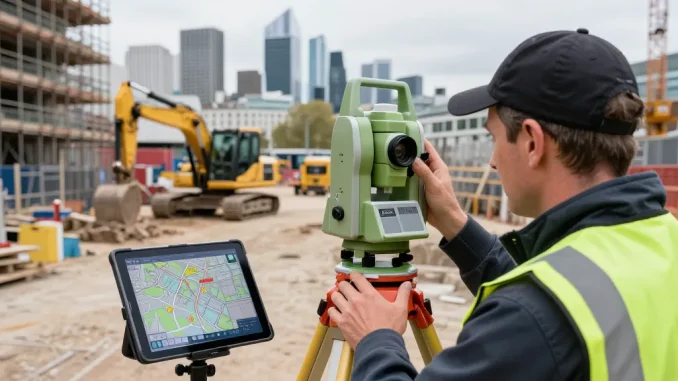
Understanding Topographical Land Surveys London
Topographical surveys, essential tools for any development project, are critical in accurately mapping the natural and man-made features of a land parcel. These surveys offer detailed insights that are invaluable for a range of applications, including construction, land development, and urban planning. For those exploring options, topographical land surveys london can provide comprehensive insights that can inform design decisions and mitigate risks.
What is a Topographical Survey?
A topographical survey is a detailed representation of a particular area, showcasing both the natural landscape and any existing structures. The survey provides critical data such as contours, elevations, trees, and built features, allowing stakeholders to visualise the site accurately. Typically, these surveys are undertaken with high precision, capturing details that are crucial for effective planning and development.
Key Benefits of Topographical Surveys
- Informed Decision-Making: With accurate data, architects and engineers can design structures that blend seamlessly with the landscape.
- Risk Management: Identifying potential hazards, such as flood zones or unstable ground, enables better risk assessment.
- Compliance: Many local authorities require a topographical survey as part of the planning permission process.
- Cost Efficiency: By uncovering potential issues early in the design phase, costly revisions can be avoided.
Common Applications in Urban Planning
Topographical surveys find application across various sectors, including:
- Construction: Essential for planning new buildings and infrastructure projects.
- Land Development: Used for residential and commercial developments to ensure suitability.
- Environmental Assessments: Vital for evaluating the impact of proposed developments on the natural environment.
Why You Need a Topographical Survey
When embarking on any construction or land development project, a topographical survey is an indispensable tool. It serves not only to inform design but also to ensure that the proposed developments align with the site’s characteristics.
Supporting Planning Applications
Local government authorities often stipulate the inclusion of a topographical survey with planning applications. This requirement highlights how integral these surveys are in demonstrating that a project complies with planning regulations and suits the character of the land.
Identifying Site Constraints and Hazards
Topographical surveys help in pinpointing critical site features that could impact construction, such as elevation changes, existing structures, and potential hazards. Understanding these elements allows developers to design projects that are not only feasible but also safe.
Preventing Costly Errors in Development
Inaccurate or incomplete data can lead to significant financial implications, including redesigns or legal disputes. A comprehensive topographical survey lays a solid foundation for any project, reducing the chances of encountering such issues later.
Who Should Use Topographical Land Surveys?
Topographical land surveys cater to a variety of professionals and stakeholders involved in planning and development.
Architects and Engineers’ Needs
Architects and engineers rely heavily on topographical surveys to create designs that honour the existing landscape while meeting client needs. Accurate data helps them align their plans with the site’s natural features, ensuring sustainable and aesthetic designs.
Developers and Contractors
Developers use topographical surveys to understand site conditions, enabling them to factor in potential challenges early in the planning process. Contractors also benefit by using survey data to plan construction logistics effectively.
Property Buyers and Investors
For property buyers and investors, a topographical survey provides a clear understanding of land features, boundaries, and potential development opportunities, mitigating risks associated with real estate transactions.
Modern Equipment and Techniques
The advancement of technology has transformed topographical surveying, making it more efficient and accurate than ever before.
Technological Advancements in Surveying
Modern surveys now incorporate advanced technologies like GPS, total stations, and 3D laser scanning. These techniques enable surveyors to capture high-resolution data quickly and with exceptional accuracy, essential for quality outputs.
Utilising Drones for Precision
Unmanned Aerial Vehicles (UAVs), or drones, are increasingly common in topographical surveying. Drones provide unique advantages, especially in hard-to-access areas, offering quick aerial surveys that produce detailed topographical maps.
Integrating 3D Laser Scanning
3D laser scanning technology allows for the rapid collection of millions of data points to create accurate three-dimensional models of terrains. This technique significantly enhances the survey data’s reliability and detail, proving invaluable for complex projects.
Cost Considerations for Topographical Surveys
Understanding the costs associated with topographical surveys can help stakeholders budget effectively and avoid unexpected expenses.
Factors Influencing Survey Pricing
Survey prices vary based on several factors, including the size of the land, complexity of the site, and the technology used. Smaller, simpler plots may be more affordable than larger, more intricate sites that require extensive data collection.
Comparative Costs: Residential vs. Commercial Projects
Residential surveys typically range from £450 to £750, while larger commercial or infrastructure projects can exceed £1,500. It’s essential to discuss your specific needs with a surveying professional to receive an accurate quote.
How to Get a Free Quote
Many surveying companies offer free online quotes based on site details provided by clients. This service allows prospective clients to gauge potential costs before committing.
What is the typical turnaround time for a topographical survey?
Generally, turnaround times can vary based on the project scale but expect results within a few days to several weeks. It’s advisable to confirm timelines with your surveying provider to plan your project accordingly.
How do topographical surveys assist in planning permissions?
Topographical surveys provide local authorities with necessary data to ensure that proposed developments adhere to zoning regulations and land use plans, which is fundamental for securing planning permissions.
What equipment is commonly used in topographical surveys?
Commonly used equipment includes total stations for measuring angles and distances, GNSS for accurate positioning, and drones for aerial data collection, among others. The choice of equipment depends on the specific survey requirements and site characteristics.
Are topographical surveys mandatory for construction projects?
While not universally required, most major construction projects will benefit immensely from a topographical survey. Moreover, local regulations may mandate surveys in specific circumstances, especially for significant developments.
What are the main features included in a topographical survey report?
A comprehensive topographical survey report typically includes detailed maps showing contours, elevations, and natural or man-made features of the land, along with any relevant measurements and annotations that support the gathering of information.